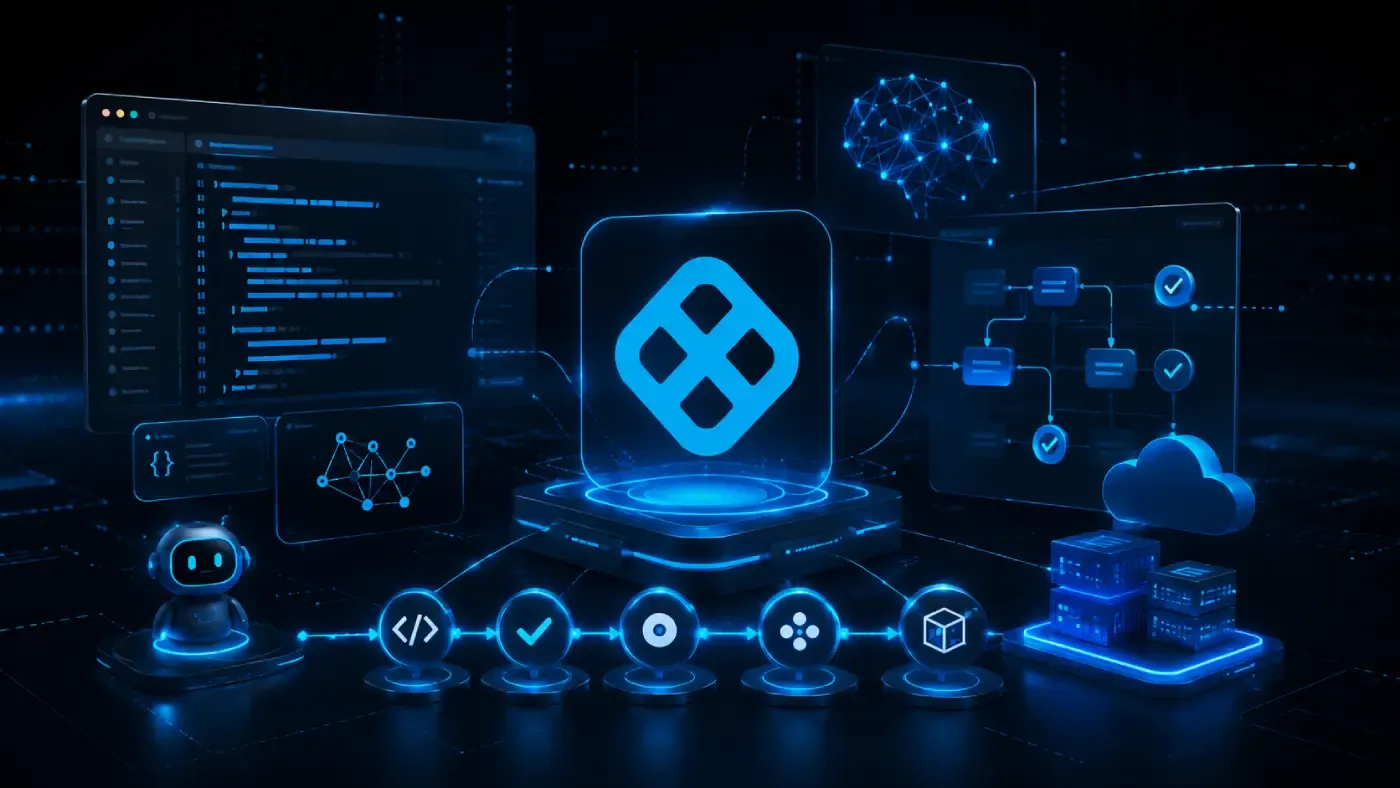
Today we’re exploring something that has quietly become the difference between an AI coding agent that ships reliable code and one that generates chaos faster than any human team can review it. We’re talking about harness engineering, and it’s a discipline we increasingly think about on every project involving autonomous coding agents.
If you’ve spent any time working with tools like Claude Code, GitHub Copilot’s agent mode, or similar autonomous coding assistants, you’ve probably noticed something: the model itself is only part of the story. What actually determines whether an agent succeeds on a real task is the scaffolding wrapped around it the tools it can call, the checks that catch its mistakes, and the feedback loops that keep it on track.
This is the heart of the Harness Engineering Revolution reshaping how engineering teams operationalize AI. In this guide, we’ll break down what harness engineering actually means, why it matters right now, and how to start applying it to your own workflows. We’ll also point you toward related reading on comparing coding agent platforms and measuring the ROI of your AI investments as you build out your strategy.
What Is Harness Engineering?
At its simplest, harness engineering is the practice of designing the environment, constraints, and feedback loops that surround an AI coding agent so it behaves reliably at scale. The “harness” is everything except the model itself: the tool interfaces, the permission rules, the verification checks, the memory system, and the sandbox the agent operates inside.
A useful shorthand that’s gained traction among practitioners: Agent equals Model plus Harness. The model provides raw reasoning ability, but the harness is what determines whether that reasoning translates into safe, useful, production-ready output.
Most coding agents ship with a basic harness out of the box. Claude Code, for example, arrives with file read/write tools, terminal access, a multi-step execution loop, and permission prompts before it takes risky actions that default configuration is exactly what elevates it from a chatbot to something that can actually complete tasks. But that starting point is rarely enough for a real engineering organization. Teams end up layering additional structure on top to match their own standards, compliance needs, and risk tolerance.
Why Harness Engineering Has Become Essential
The urgency behind this shift isn’t theoretical. As AI agents generate code faster than teams can manually review it, predictable failure patterns have emerged: architectural drift, inconsistent conventions, and security regressions that slip through unnoticed. One widely cited industry analysis found that AI-generated code was linked to a sharp rise in new security findings across studied codebases within just a few months, underscoring how quickly unmanaged agent output can accumulate risk.
The underlying issue is structural rather than a matter of the model simply “trying harder.” Asking an agent to follow coding standards inside a prompt is fundamentally different from wiring an automated linter that blocks a pull request outright when standards are violated. The former depends on the model choosing to comply; the latter enforces the rule every time, regardless of what the model decides. Harness engineering exists precisely to formalize that second, more dependable approach.
This is also why the conversation among engineering leaders has evolved. A couple of years ago, the dominant question was which model produced the best code. That shifted to how to feed models the right context. Today’s question, and the one harness engineering answers, is how to operationalize agents so they can be trusted with real production work.
The Five Layers of a Production-Grade Harness
A mature agent harness generally breaks down into five interconnected layers:
1. Tool Orchestration
This layer governs what actions an agent can actually take which APIs it can call, which files it can touch, and in what sequence. Well-designed orchestration limits an agent to exactly the capabilities a task requires, nothing more.
2. Verification Loops
Verification is where automated tests, linters, and CI gates check an agent’s output before it’s allowed to progress. Rather than trusting a single generation pass, verification loops let an agent plan, execute, check its own results against real feedback, and revise a pattern sometimes called a plan-execute-verify loop.
3. Context and Memory
This layer decides what information the agent has access to at any given moment: repository history, prior decisions, style guides, and architectural documentation. Getting this right connects directly to broader context engineering practices, and it’s worth understanding how it differs from other AI learning approaches, which we cover in our breakdown of model-based versus model-free learning.
4. Guardrails
Guardrails are the explicit boundaries an agent cannot cross permission controls, human-approval checkpoints for risky actions, and hard limits on scope. These exist specifically to prevent the kind of unsupervised, irreversible mistakes that make engineering teams hesitant to grant agents broader autonomy.
5. Observability
Finally, observability means being able to see what an agent actually did, why, and how well it performed. Without visibility into agent behavior, teams can’t diagnose failures or improve the harness over time.
Real–World Signals of Harness Engineering in Action
Several engineering organizations have already published details of production systems built around these principles. Spotify’s internal system for managing AI-generated pull requests has processed well over a thousand agent-authored PRs across many repositories by relying on structured verification loops rather than manual review alone. Companies including Stripe, Ramp, and Uber have similarly moved from individual engineers running solo coding agents toward coordinated, team-level systems governed by shared harness standards.
This pattern moving from ad hoc agent use to a deliberately engineered system is the clearest sign that harness engineering has shifted from a niche practice to a mainstream discipline.
How to Start Applying Harness Engineering
If you’re leading an engineering team evaluating AI coding agents, a practical starting point is establishing a baseline before investing further. Useful metrics include cost per merged pull request, time-to-merge for agent-assisted changes, review velocity relative to PR size, and compute spend per developer. From there, you can identify which of the five harness layers most needs attention.
It’s also worth being deliberate about which agent platform and vendor ecosystem you build your harness around, since switching costs can be significant later. Our guide to choosing the right AI development partner walks through the key evaluation criteria if you’re assessing outside help for this work.
Frequently Asked Questions
What is the simple definition of harness engineering?
Harness engineering is the practice of designing the tools, constraints, and feedback loops around an AI coding agent so its output is reliable, safe, and production-ready as opposed to relying purely on the model’s own judgment.
Is harness engineering the same as prompt engineering?
No. Prompt engineering focuses on how instructions are worded to influence a single model response. Harness engineering focuses on the surrounding system tools, verification, guardrails, and memory that governs an agent across an entire multi-step task.
Do I need a custom harness if I’m already using a tool like Claude Code?
Most agents come with a default harness that covers basic execution. Larger or more regulated teams typically add custom verification gates, permission rules, and observability on top to match their own standards.
What’s the biggest risk of skipping harness engineering?
Unchecked agent output tends to introduce architectural drift and security issues that compound over time, since there’s no deterministic gate stopping problematic changes from merging.
How do I measure if my harness is working?
Track metrics like time-to-merge, review velocity, cost per merged PR, and the rate of issues caught before versus after deployment.
The Harness Engineering Revolution reflects a broader maturation in how organizations work with AI: the model was never going to be the whole solution, and the systems built around it are what actually determine outcomes in production. If your team is scaling up AI coding agent usage, now is the time to start treating your harness as a first-class piece of engineering infrastructure rather than an afterthought.
Ready to build a harness strategy that fits your team? Visit ThinkToShare to explore how we help engineering teams design reliable, production-grade AI coding workflows.
