Today we’re examining something that’s quietly reshaping how development teams build intelligent software — and it’s a shift we believe every modern developer needs to understand.
We’re talking about Antigravity’s AgentKit 2.0, the latest evolution of one of the more ambitious frameworks in the AI agent space. While there’s no shortage of AI tooling announcements competing for your attention, AgentKit 2.0 stands out for a specific reason: it doesn’t just help you use AI agents — it gives you the infrastructure to build applications around them.
In this article, we’ll walk through what AgentKit 2.0 actually offers, why it matters for teams building AI-powered applications today, how it compares to the broader landscape, and what practical value it brings to real-world development workflows.
What Is Antigravity’s AgentKit 2.0?
AgentKit is Antigravity’s developer framework designed to simplify the creation, orchestration, and deployment of AI agents within production applications. Version 2.0 represents a significant step forward from its predecessor — moving beyond simple agent scaffolding toward a complete development paradigm for intelligent, task-driven software.
At its core, AgentKit 2.0 gives developers a structured way to define agents, assign them capabilities (tools, memory, context), and wire them into larger application flows. Think of it as a framework that handles the hard parts of agent engineering — state management, tool invocation, multi-step reasoning loops, error recovery — so your team can focus on what those agents actually do.
The Problem AgentKit 2.0 Solves
Most developers who’ve experimented with AI agents know the frustration well. Getting a prototype working in a notebook or demo environment is surprisingly straightforward. Getting that same agent to behave reliably in a production application — handling edge cases, maintaining context, integrating with existing systems — is an entirely different challenge.
AgentKit 2.0 is built specifically to bridge that gap.
Core Features That Make AgentKit 2.0 Stand Out
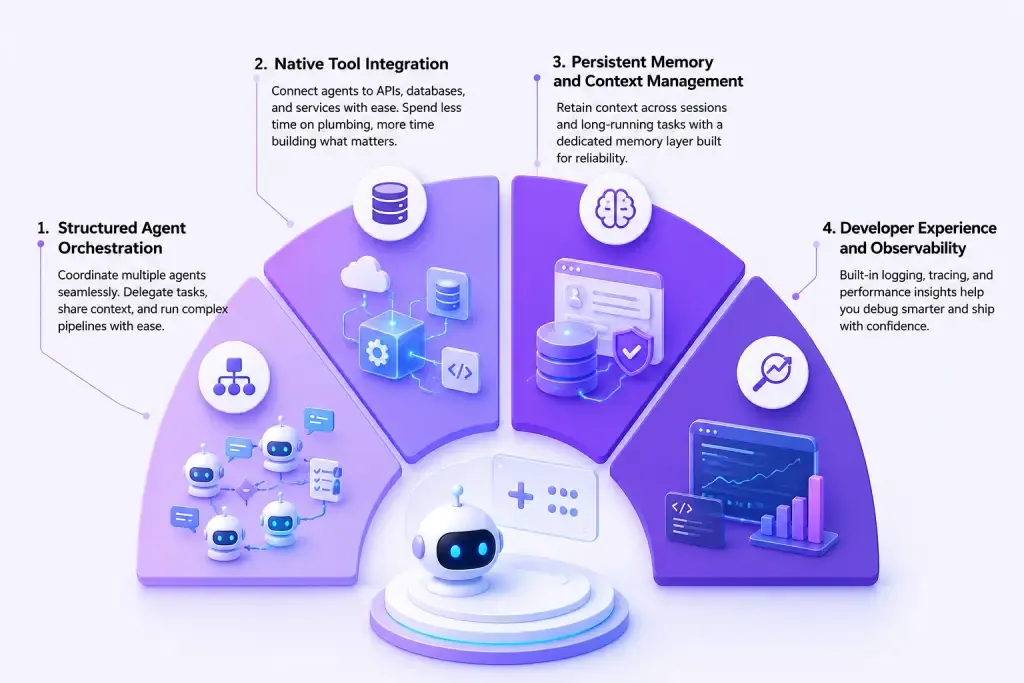
Structured Agent Orchestration
One of the defining characteristics of AgentKit 2.0 is how it approaches multi-agent coordination. Rather than treating each agent as an isolated unit, the framework provides orchestration primitives that allow agents to delegate tasks, share context, and operate in coordinated pipelines.
This is particularly valuable for complex applications — think customer service platforms where a triage agent routes requests to specialized agents, or data pipelines where an analysis agent hands findings to a reporting agent. AgentKit 2.0 gives teams a clean, maintainable way to model these relationships in code.
Native Tool Integration
Modern AI agents are only as capable as the tools they can access. AgentKit 2.0 ships with a tool integration layer that makes connecting agents to APIs, databases, and external services significantly less painful. The framework handles the protocol-level complexity of tool calling, response parsing, and error handling — leaving developers to define what tools are available rather than how they’re wired in.
This approach aligns with how the broader ecosystem — including frameworks like LangChain and LlamaIndex — has moved toward tool-centric agent design. What AgentKit 2.0 adds is tighter integration with Antigravity’s deployment infrastructure and more opinionated patterns for production use.
Persistent Memory and Context Management
One of the most common pain points in building AI-powered applications is managing what agents remember across sessions and within long-running tasks. AgentKit 2.0 introduces a dedicated memory layer that supports both short-term (within-session) and long-term (cross-session) context retention.
This is a meaningful improvement over approaches that rely on developers manually managing context windows or building bespoke memory solutions. For applications like AI assistants, intelligent workflows, or personalized recommendation systems, this capability alone represents considerable engineering time saved.
Developer Experience and Observability
AgentKit 2.0 ships with built-in observability tooling — logging, tracing, and performance visibility baked into the framework rather than bolted on as an afterthought. Development teams can inspect exactly what agents are doing at each step, which makes debugging non-deterministic agent behavior far more tractable.
If you’ve ever tried to diagnose why an agent chose a particular reasoning path or failed silently mid-task, you’ll understand why this matters. Observability is what separates a framework you can actually maintain from one that works fine until something unexpected happens.
How AgentKit 2.0 Fits Into the Broader AI Agent Landscape
The market for AI agent frameworks is crowded and evolving fast. Tools like AutoGen, CrewAI, and various cloud-native agent services each occupy different positions in the ecosystem. Where AgentKit 2.0 distinguishes itself is in its explicit focus on application development rather than pure research or experimentation.
Many agent frameworks optimize for flexibility and exploration — they’re excellent for trying things out, but introduce significant overhead when you need to ship production software. AgentKit 2.0 makes deliberate trade-offs in the direction of reliability, maintainability, and integration with existing development workflows.
If you’re already navigating decisions about AI tooling — say, comparing AI-assisted coding environments as we explored in our breakdown of GitHub Copilot vs Cursor vs Claude Code — AgentKit 2.0 occupies a complementary space. It’s not about generating code; it’s about building applications where AI agents are first-class architectural components.
For teams evaluating broader development stack choices, our guide to finding the right AI development company covers how to assess partners who can implement frameworks like AgentKit 2.0 effectively.
Real-World Applications Being Built with AgentKit 2.0
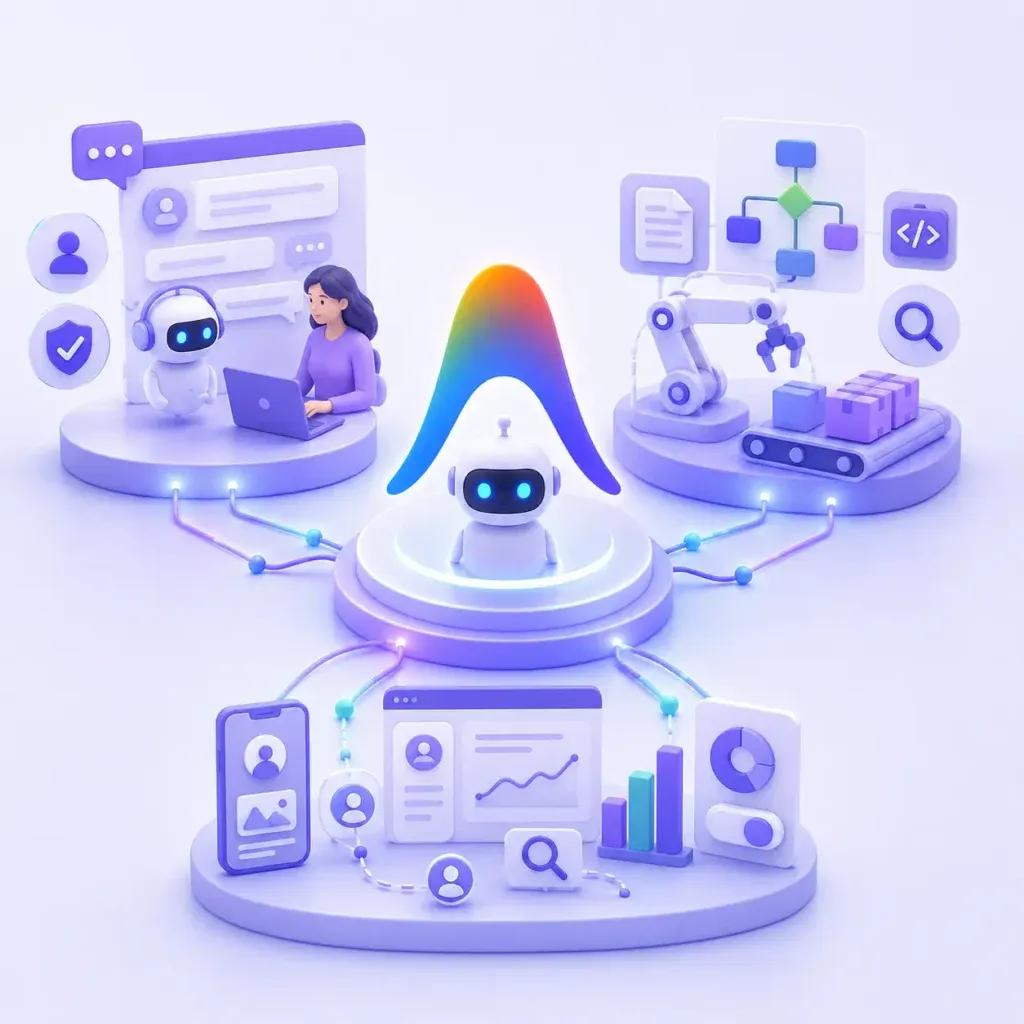
Intelligent Customer Workflows
Businesses are using AgentKit 2.0 to build customer-facing workflows where agents handle inquiry triage, data lookup, and response generation — reducing the manual overhead of support operations while maintaining quality control through human-in-the-loop checkpoints.
Internal Automation Pipelines
Development teams are deploying AgentKit 2.0 to automate internal processes that were previously too context-dependent for traditional rule-based automation. Document processing, code review assistance, and knowledge base queries are common early implementations.
Adaptive Product Features
Product teams are integrating AgentKit 2.0 to power features that reason about user behavior and respond dynamically — personalization engines, adaptive onboarding flows, and context-aware search are all natural fits for the framework’s capabilities.
If you’re evaluating platforms for AI-assisted features within web applications, it’s worth pairing AgentKit 2.0 with modern frontend tooling — including features like those we covered in our explanation of Cursor’s Canvas feature, which can accelerate the UI development side of these projects.
What This Means for Application Development Teams
The shift AgentKit 2.0 represents isn’t just technical — it’s architectural. For years, building intelligent application behavior meant either training custom models (expensive, slow) or stitching together API calls to hosted models with custom logic (fragile, hard to maintain). Agent frameworks like AgentKit 2.0 introduce a third path: structured, maintainable agent components that can be composed into sophisticated application behavior.
This has real implications for how teams scope, staff, and deliver AI-powered projects. Developers who understand agent-oriented architecture will be increasingly valuable. Teams that adopt structured frameworks early will build compounding advantages in both delivery speed and application quality.
For developers working within specific backend ecosystems, it’s worth noting how agent frameworks complement existing tooling. Our coverage of Livewire 4 for Laravel developers is a good example of how modern backend frameworks are evolving in parallel — and the two can co-exist elegantly in full-stack architectures.
We’ve also covered Emergent.sh alternatives for teams exploring the broader landscape of AI-assisted development platforms, which provides useful context for where AgentKit 2.0 sits in that ecosystem.
Frequently Asked Questions
What types of applications benefit most from AgentKit 2.0? Applications that require multi-step reasoning, dynamic tool use, or context-aware behavior across sessions are the strongest fit. This includes customer service platforms, internal automation tools, intelligent search, and adaptive product features.
How does AgentKit 2.0 compare to LangChain or AutoGen? AgentKit 2.0 is more opinionated and production-oriented than frameworks like LangChain, which prioritize flexibility. If your goal is rapid experimentation, LangChain may offer more freedom. If you’re building production applications, AgentKit 2.0’s structured patterns and built-in observability offer a meaningful advantage.
Do you need specialized AI expertise to use AgentKit 2.0? No. The framework is designed for developers with standard software engineering backgrounds. Familiarity with API integration and modern backend development is sufficient for most implementations. AI expertise becomes relevant for advanced customization of agent reasoning behavior.
Is AgentKit 2.0 suitable for small development teams? Yes. The framework’s abstractions reduce the infrastructure work required to ship agent-powered features, which makes it particularly valuable for smaller teams who can’t afford to build custom agent infrastructure from scratch.
How does memory management work in AgentKit 2.0? AgentKit 2.0 provides a dedicated memory layer with support for both within-session and cross-session context. Developers configure memory scope at the agent level, and the framework handles storage, retrieval, and context injection automatically.
Conclusion: The Agent-First Application Is Here
AgentKit 2.0 represents a concrete, practical answer to a question development teams have been wrestling with: how do you actually build production software where AI agents are reliable components, not experimental additions?
The framework’s combination of structured orchestration, native tool integration, persistent memory, and built-in observability gives development teams the foundation they need to build agent-powered applications that hold up in the real world — not just in demos.
We’re at an inflection point in application development. Teams that learn to architect around AI agents effectively will build faster, deliver more capable products, and establish patterns that compound over time. AgentKit 2.0 is one of the more serious frameworks available for teams ready to make that move.
If you’re evaluating whether AgentKit 2.0 is the right fit for your next project — or looking to understand how AI agent frameworks should factor into your broader development strategy — we’d recommend starting with a focused proof-of-concept around one specific workflow before committing to full integration. The framework rewards deliberate implementation.
Interested in exploring how AI agent frameworks fit into your development stack? Explore our related guides on AI tooling, development environments, and modern backend frameworks to build a complete picture of your options.
