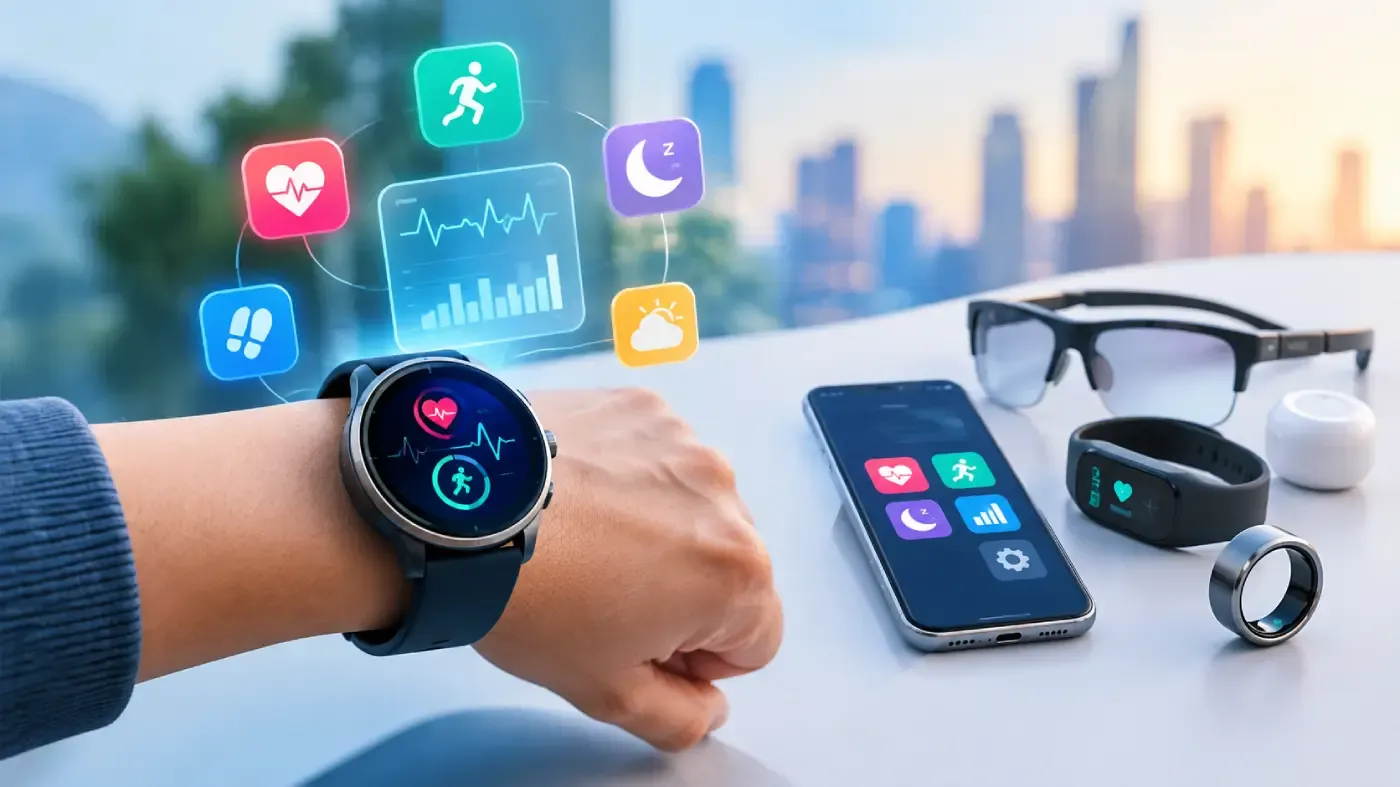
Wearable devices have become part of everyday life. People use smartwatches to track their steps, monitor their sleep, receive calls, and keep an eye on their fitness goals. Businesses are also finding new ways to use wearable technology, from healthcare monitoring to hands-free support for workers.
But a wearable device is only as useful as the software behind it. The app needs to collect the right information, display it clearly, connect with other devices, and protect personal data.
That is why wearable technology trends in 2026 are worth watching, especially for businesses planning to build a new digital product or improve an existing mobile app. Artificial intelligence (AI), health tracking, connected devices, and better user experiences are changing what wearable apps can do.
In this guide, we will explore the major trends, the benefits for businesses, the challenges developers face, and what to consider before investing in wearable application development.
1. Top Wearable Technology Trends in 2026
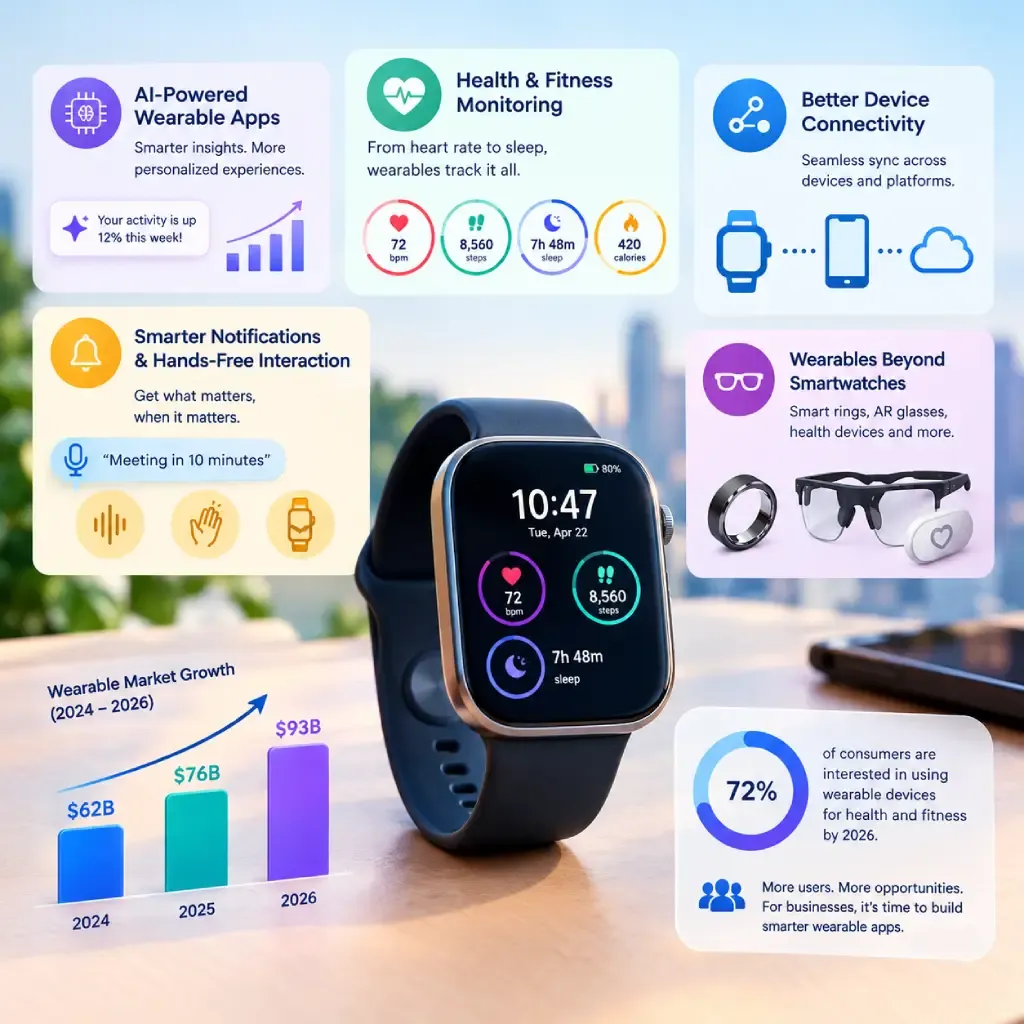
Wearable technology is moving beyond basic step counting. Today’s devices can combine sensor data, mobile apps, and AI-powered features to give users more useful information throughout the day.
Here are the trends worth paying attention to in 2026.
AI-powered wearable apps
AI is making wearable apps more personal. Instead of simply showing a list of numbers, an app can use activity history and other available data to offer relevant feedback.
For example, a fitness app might compare a user’s recent workouts, highlight changes in activity levels, and suggest a suitable training goal. Apple’s watchOS 26 introduced Workout Buddy, which uses workout data and fitness history to provide personalised spoken motivation.
Businesses developing wearable apps can explore similar features, provided the device supports them and the data is used appropriately.
Health and fitness monitoring
Health and fitness remain major areas for wearable application development. Smartwatches and fitness bands can track metrics such as heart rate, sleep patterns, activity levels, and workout performance.
In 2026, the focus is increasingly on helping users understand these measurements rather than simply collecting them. Sleep scores, personalised activity insights, and longer-term trends are examples of this approach.
Healthcare providers may also explore wearables for remote monitoring and follow-up care. However, consumer wellness features should not be treated as a substitute for medical diagnosis or professional advice.
Better connectivity between devices
A wearable app rarely works in isolation. It may need to communicate with a smartphone, cloud platform, healthcare system, or business application.
Improved integration can make the experience more useful. For instance, a fitness app could sync activity data between a smartwatch and a mobile dashboard, while an industrial wearable could send equipment inspection updates to a central system.
Businesses planning connected products should consider how their wearable app will fit into their existing software ecosystem. A well-planned cloud app development approach can help with data synchronisation, backend services, and scaling as usage grows.
Smarter notifications and hands-free interactions
People do not want to navigate complicated menus on a tiny screen. Wearable apps work best when they deliver the right information quickly.
Short alerts, voice interactions, simple gestures, and glanceable dashboards can make everyday tasks easier. For example, a delivery worker could receive an urgent job update on a smartwatch without repeatedly checking a phone.
The challenge for developers is to make notifications useful without overwhelming users.
Wearables beyond smartwatches
Smartwatches and fitness bands are familiar, but wearable technology also includes smart rings, connected glasses, and specialised devices used in healthcare and industry.
Each device creates different development requirements. A smart ring may prioritise passive data collection and battery life, while smart glasses may need camera integration, voice controls, or visual instructions.
The best opportunity is not necessarily to build an app for every wearable device. It is to identify a specific user problem and choose the hardware that solves it well.
2. Benefits of Wearable App Development for Businesses
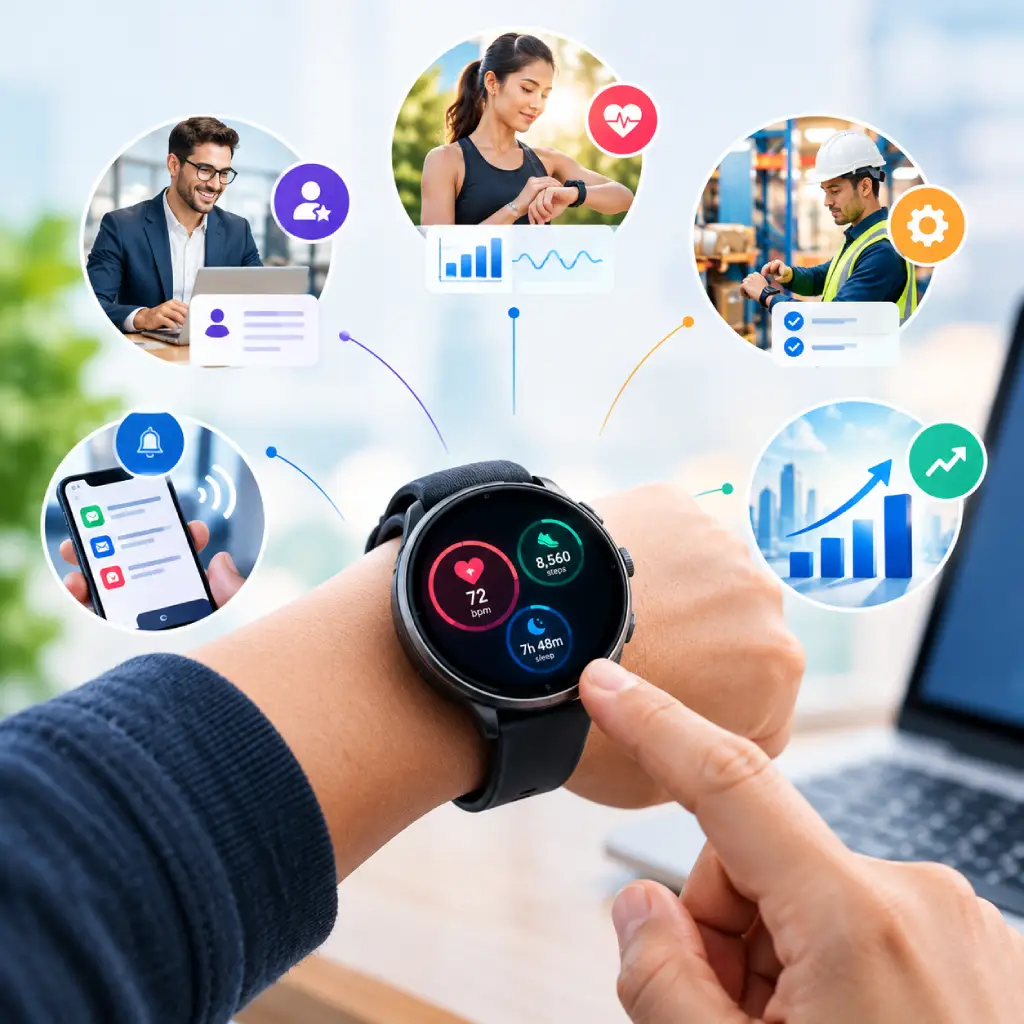
Wearable applications can create value for both customers and businesses. The benefits depend on the use case, the quality of the data, and how well the app fits into everyday routines.
A more personalised user experience
Wearable devices can collect information over time, allowing apps to tailor their features to individual users.
A fitness platform, for example, could adjust activity goals based on a user’s preferences and recent performance. A workplace app could display tasks relevant to an employee’s role.
Personalisation should remain transparent and give users control over how their information is used.
Faster access to important information
Wearables reduce the need to open a phone or computer for every update. This can be useful when a person is exercising, travelling, working on a factory floor, or assisting a customer.
For businesses, the value comes from making essential information available at the right moment. An alert about a delayed delivery or a safety check may be more useful than a detailed dashboard that nobody has time to open.
New products and revenue opportunities
Companies can build wearable apps as standalone products, companion apps for existing services, or paid features within a broader subscription.
For example, a sports business might offer advanced training insights, while a healthcare platform could provide optional monitoring tools where appropriate. Revenue models should reflect genuine customer value rather than locking essential functionality behind unnecessary upgrades.
Better operational visibility
Wearables can help organisations collect updates from people working away from desks. Field technicians, warehouse teams, and logistics staff may use connected devices to receive instructions and confirm task completion.
When integrated with existing systems, these updates can reduce manual reporting and help managers identify delays earlier.
However, businesses should evaluate whether wearable hardware actually improves the workflow before investing in a custom solution.
3. Major Challenges in Wearable Application Development
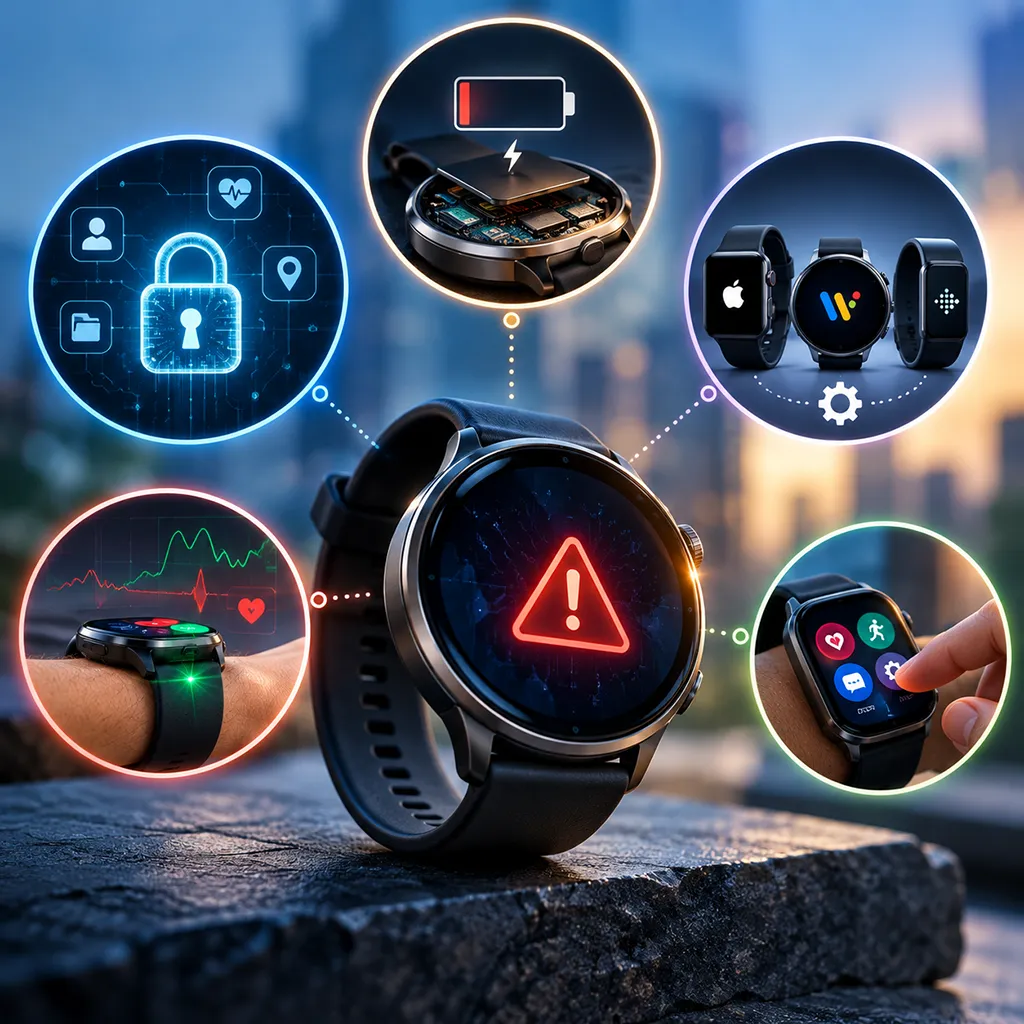
Despite the opportunities, building a reliable wearable app requires more than shrinking a mobile app to fit a smaller screen.
Limited battery life and device resources
Wearables have less room for large batteries and powerful hardware than most smartphones. Continuous sensor use, frequent network requests, and complex processing can drain the battery quickly.
Developers can address this by reducing unnecessary background activity, optimising data collection, and processing information locally when practical.
Data privacy and security
Wearable apps may handle personal information, including activity records, location data, and health-related measurements. Poor security can expose users to privacy risks and damage a company’s reputation.
Useful safeguards include encrypted data transmission, appropriate access controls, secure authentication, limited data retention, and clear consent options. Businesses should also review applicable privacy and healthcare regulations based on their markets and use cases.
Compatibility across devices and platforms
Apple Watch, Wear OS devices, smart rings, and other wearables do not share identical hardware or software capabilities. A feature that works on one device may be unavailable or behave differently on another.
Before development begins, define the supported devices and operating system versions. Test on real hardware wherever possible, particularly when the app depends on sensors, Bluetooth connectivity, or background processes.
Sensor accuracy and data interpretation
Wearable sensors can provide useful measurements, but their accuracy varies by device, activity, and conditions. Poorly interpreted data may lead to misleading insights.
This is especially important in healthcare applications. The US Government Accountability Office has highlighted both the potential benefits of wearable health data and the challenges involving reliability and integration into clinical decision-making.
Developers should communicate uncertainty clearly and avoid presenting unvalidated measurements as medical conclusions.
User experience on a small screen
A smartwatch display cannot accommodate the same amount of information as a phone. Long forms, complicated menus, and excessive notifications can quickly make an app frustrating.
Keep the most important actions easy to reach. Use readable text, short interactions, clear feedback, and mobile companion features for tasks that need more space.
4. How to Build a Successful Wearable App in 2026
A wearable app project is easier to manage when the business problem is clear before development begins.
Step 1: Define the purpose of the app
Start with one practical question: what should the wearable app help users do?
It might track workouts, deliver urgent alerts, support remote patient monitoring, or help employees complete tasks. Avoid adding features simply because a competitor offers them.
Step 2: Choose the right device and platform
Decide whether the app will support Apple Watch, Wear OS, or another wearable platform. Consider the target audience, hardware capabilities, available sensors, and integration requirements.
For a startup, beginning with one platform can help keep the initial scope manageable. Additional devices can be supported after the core product has been tested.
Step 3: Design for short interactions
Wearable app design should prioritise speed and clarity. Users may only glance at the screen for a few seconds.
Focus on essential information, accessible controls, readable text, and straightforward navigation. More detailed reports, account settings, and configuration options can live in the companion mobile app.
Step 4: Develop and test the core features
Build the essential features first, then test them under realistic conditions. Check battery consumption, sensor behaviour, connectivity, notifications, and data synchronisation.
It is also worth testing what happens when a device loses its connection, the battery runs low, or a user revokes a permission.
Step 5: Plan for maintenance and future growth
Wearable platforms change over time, and operating system updates can affect app behaviour. Budget for bug fixes, compatibility testing, security updates, and user feedback after launch.
If your product also needs a mobile app, backend APIs, or AI features, plan these components together. Think To Share’s AI app development guide offers a useful starting point for understanding how AI capabilities can fit into an application.
5. How Much Does Wearable App Development Cost?
There is no single price for wearable application development. The cost depends on the features, supported devices, design requirements, backend infrastructure, and complexity of integrations.
A simple companion app with basic notifications will generally require less work than an application involving continuous sensor data, AI-driven insights, cloud synchronisation, and healthcare integrations.
Before requesting a quote, prepare a clear list of must-have features, target devices, third-party integrations, and expected users. Ask developers to separate initial development costs from ongoing hosting, maintenance, and licensing expenses.
For businesses comparing development partners in different countries, this USA vs. India app development cost comparison can help explain the factors that influence pricing.
One practical approach is to launch a minimum viable product (MVP) with a focused feature set. Once users have tested it and the business has evidence of demand, the team can prioritise further investment.
Frequently Asked Questions
1. What are the biggest wearable technology trends in 2026?
The main trends include AI-powered personalisation, health and fitness monitoring, connected devices, smarter notifications, and wearables such as smart rings and smart glasses. The right trend to invest in depends on the target users and the problem the product aims to solve.
2. What is wearable application development?
Wearable application development is the process of creating software for devices such as smartwatches, fitness trackers, smart rings, and connected glasses. These apps may collect sensor data, display notifications, connect with mobile apps, or integrate with cloud-based systems.
3. How long does it take to develop a wearable app?
The timeline depends on the scope. A basic app may take a few weeks to a few months, while a complex product with multiple device integrations, AI features, or healthcare requirements may take considerably longer. A technical assessment is needed for a reliable estimate.
4. Which industries can benefit from wearable apps?
Healthcare, fitness, sports, manufacturing, logistics, retail, and field services are among the industries that may benefit. For example, fitness businesses can offer personalised training tools, while industrial companies can use wearables to deliver task instructions and collect operational updates.
5. What should businesses consider before investing in wearable app development?
Start with the user problem, target device, essential features, development budget, privacy requirements, and maintenance plan. It is also important to validate demand before investing in advanced features that users may not need.
Conclusion
Wearable technology is becoming more useful as devices, sensors, and software work together to provide timely information and more personalised experiences. In 2026, AI, health monitoring, device connectivity, and simpler interactions are creating new opportunities for businesses.
But a successful wearable app is not about including every available feature. It is about solving a real problem while keeping the experience reliable, secure, and easy to use.
For businesses planning a new wearable product, start small, choose the right platform, and test the idea with real users before expanding its features.
Planning a wearable app for your business? Think To Share helps businesses build custom mobile apps, web platforms, and AI-powered software solutions. Visit Think To Share to discuss your project requirements and explore a practical development approach.
